Search This Blog

5.11.2013

Megaton Dias Seminar: The Best Position is Efficiency

Wellington "Megaton" Dias, your humble blogger, Jack McVicker

Keeping it Old School: There are no new techniques, just different things that become popular and different people who market them better.  While it is fine to learn the berimbolo, 50/50, rubber guard, or whatever, do not do so at the expense of basics and solid positioning.

Situation: Jiu-jitsu is situational, everything works but only at the right time and position.  You can't do what you want, you can only want to do what they give you.

Efficiency: All the positions of jiujitsu should not be focused on as individual and absolute solutions but rather as more or less efficient ways to win the fight, based on the situation of the moment.  Guard is a dynamic change from one type of guard to another, depending on which has the best cost to benefit ratio given an opponent and action at the moment.

Intellect should trump emotions:  Fight with your brain, not your fears.  It is the sign of a great fighter not that they win easily, but that they win in the face of overwhelming adversity by cool and collected intellect.

Illegal Techniques: While rank novices should be discouraged from doing illegal techniques, everyone who is aware of safe training should avail themselves of all techniques, including foot locks and knee bars so that they become used to them before they become part of their legal competition arsenal.

Closed Guard Arm Drag Series
From the closed guard, free the control of the lapel using two-on-one sleeve control, and pull their arm cross body and into the axilla.  Grip the triceps area of the the gi (or cup the triceps if no-gi).

  • Straight Arm Bar: Pivot your body and bring the leg over the head for straight arm bar
  • Reverse Arm Bar: If they resist the above and attempt to smash, bench press your knees and bring the near arm wrist blade over their other arm, just proximal to the elbow.  Grab with your other hand and pull down, keeping an arch in your body and hence space between their elbow joint a you for the submission.  Your ear should go to your shoulder, trapping their wrist.
  • Oma Plata:  If they avoid the reverse arm bar, swim your near arm inside and wrap catching their arm beneath the axilla, note that this is the other arm from the one you originally trapped above.  Spin for the oma plata submission by pushing your far foot against the lateral portion of their neck.
  • Arm Triangle:  In this case use a two-on-one sleeve control free the grip and to pull the arm cross body but do not trap it in the axilla, instead release the opposite hand control and wrap your partners neck, locking this hand into the deep figure four on your other biceps.  I usually place this hand on my head for added pressure.
  • Side Ezekiel:  Similar to the previous, but this time the wrapping arm's (still the one that is opposite the grabbed arm) hand goes inside your opposite sleeve and the knife edge of your free hand slides down your arm against their neck for the choke.

Side Ezekiel, Mounted Variation: If you insert one hand for a cross collar choke your opponent may turn on their side to defend, in which case switch to the technical mount. Free your grip and wrap this arm around their neck gripping the inside of your opposite hands sleeve.  The free hand slides down your arm to their neck for the choke.

Pulling the Guard to De La Riva to Pump Handle Sweep: Control lapel and sleeve, sit and place your sleeve-contol side foot into their hip.  Drop this foot to their thigh and push them away, use the pendulum action of your other leg to place the De La Riva hook.  Pass the sleeve under their leg to your other hand, then reach up and grab same side lapel and pull down as you tilt them sideways.

Spider Guard Lateral Sweep:  Control the sleeve grip with the same side foot in the cubital fossa and the contralateral side with lapel control grip and the foot in the hip.  Switch the foot in the hip to a De La Riva hook and switch the grip to sleeve control.  Now elevate the cubital fossa as you pull down on the sleeve on the De La Riva side to sweep them sideways.

Spider Guard Tomoe Nage Sweep: Control the sleeve grip with the same side foot in the cubital fossa and the contralateral side with lapel control grip and the hook under their thigh.  Pull your partner forward, and as their weight shifts move your foot from under thigh hook to their same side hip and elevate.  You should sweep your partner over the shoulder opposite the thigh hook.

Reverse De La Riva to the Back: From De La Riva guard, obtain a cross collar thumb pointed inferiorly grip on the lapel opposite your hook.  Take your other hand and place it anterior to the contralateral ankle.  Now bring the extended leg in and replace the De La Riva hook from the medial side, the former De La Riva hook leg frees the hook extends to their hip.  Now pull the lapel and use your opposite hand and legs to spin you underneath and between their legs.  The hook leg should rotate around their leg to be in position for the rear mount hook and your other shin should be behind their same side knee.  Grab their belt and kick this leg forward to obtain rear mount.  If they flop forward, like a banana, climb to take their back.

Lasso Guard to Biceps Slicer: Set up a lasso guard with your shin in the cubital fossa in the ipsilateral, bring your other leg across their body so you end up perpendicular to your opponent, with their forearm trapped against your abdomen.  Now grip the trapped arm's triceps and pull as your knee flares laterally.

Two Ways to Pass the Z-Guard
One of your legs is trapped between your partner's legs, the inferior leg is beneath your shin and your knee is sandwiched between this leg and your superior leg.  Grapevine the trapped  side's arm behind the superior leg and in front the the inferior leg.
  1. Post on your free leg, turn perpendicular and baseball slide out your trapped leg.  Immediately switch your hips back toward your partner to obtain side control.
  2. Fall forward onto your free side and step the trapped leg back over to the negative side.  Then switch your hips back to regain side control.

Ridiculously Simple Foot Sweep: Control the kimono at the elbow and lapel, take a pivot step away from the lapel control, lift their elbow and pull down on the lapel, as you sweep in front of (lapel grip side) where they would step.

Ridiculously Difficult Foot Sweep: As above, take a pivot step away from the lapel control, pull their elbow down and lapel up as you sweep in the direction of your step (elbow grip side), attempting to bring their near foot to their far foot.

5.09.2013

No joke chokes: One handed rear mounted choke

I have been working on taking the back, mostly because it is a lot easier to fight someone when you're behind them.  One of my problems is that getting the choke is difficult because my opponent attempts to control one of my arms, allowing the other to control the lapel.  My opponent knows that there is no way I can choke them if I only have one lapel control.
Solutions to this have been proposed: One option is the chicken wing choke but I find that getting the deep underhook from behind is very difficult when they aggressively tuck their arm down.  Another option is the wrestling version of the rear naked, but this means getting your arm all the way across their neck, which typically means they start defending that arm.
When I take the back if I plan ahead I can often obtain one lapel.  It is the other hand that gets stopped.  So I needed a solution:

  1. Rear ezekiel: From the rear mount obtain cross collar lapel control, with your other hand reach across and obtain a grip inside your sleeve on the opposite side of their neck from your lapel control.  Now cinch the choke by pulling on the collar while bring your forearm across the back of their neck.
  2. Rear sleeveless ezekiel: If your sleeve is unattainable instead grab the forearm with your opposite hand, palm facing you, blocking the posterior portion of the lateral side of the neck on this side.  Place your head next to their head on the opposite side as you pull on the collar and curl your forearm toward you.
  3. Rear lapeless ezekiel:  Again from the rear mount, free and then pass your kimono down the "negative airspace" across their neck to your opposite hand.  Slip your newly freed hand inside the opposite sleeve and drop your forearm across the back of their neck.  Drop your head next to theirs opposite to your sleeve grip.

3.02.2013

Andre Galvao Seminar "The guard is grip"

Tim Sledd, Andre Galvao, and your humble blogger
Today I attended the Andre Galvao seminar hosted by Tim Sledd and Small Axe Jiu-Jitsu.  I freely admit my fondness for basic jiu-jitsu, probably because I have faith that I can do simple and screw-up complex.  So when I heard lasso guard and inverted lasso guard I prepared for the probable demise and/or permanent maiming of my training partner.  But a price must be paid for education.
Galvao stated that getting and retaining a grip was crucial for successful guard attacks.  Losing the grip typically means getting passed.  It is critical to remember that the grip will lead to a high percentage guard game.  To strengthen the grip it is recommended that athletes do pull-ups with a gi thrown over the bar.
To do the lasso spider guard correctly, Galvao recommends bending the knees, keeping the thighs close to the body.  He argues that this gives the best structure for playing from this position.

Warm-up

We warmed up by doing lasso guard repetitions.  Thus using the technique we were going to train to get the core temperature up and the joints limber.  The lasso is obtained by gripping the sleeve on the outside and wrapping it with the fingers.  Now bring your shin inside their cubital fossa (elbow pit), bring the knee to you and then laterally, pulling with the  grip hand and applying pressure with the shin.  For this drill your opposite foot is in a spider guard position in the other cubital fossa.  We will now switch lasso to lasso from side to side.  Bring your knee proximally, toward you, clearing their arm, now bring it laterally moving your knee to the outside and then inferiorly to their arm.  Pull your knee medially and toward you, placing your foot in the cubital fossa, i.e. spider guard position.  On the opposite, do the reverse: bring your leg medial to their arm, and then move your knee inferiorly and laterally to their arm.  Bring your shin superiorly and medially to their forearm, placing the shin in their elbow fossa.  Use your spider guard foot to help switch your body angle and make it easier to set the lasso.
You will use the lasso to lasso switch, but now throwing a triangle into the mix.  Start with the lasso guard on one side, and switch to the other as above.  From this lasso, slide the lasso foot to their hip.  Now shoot the calf from the spider guard side across the back of your partner's neck and cinch the triangle.

Inverted Lasso Guard Sweep

Obtain a lasso on one side, hook your other foot on the distal, anterior side of their shin on this side (i.e. cross body).  Now dive underneath by reaching your free hand to the opposite ankle, displacing the hook you placed before.  You should now be parallel, but facing the opposite direction.  Now rock forward, using your shin which is wrapped by their arm to pull them forward over your legs.  You can triangle your leg to help you rock them forward.  If your partner stalls out and drops their weight, go perpendicular and roll them sideways, over your "free" side.  Do this by breaking down their knee with the hand you grabbed their ankle with earlier.  Now switch to oma plata, but pull them medially and kick your free leg through.  They will roll across your body.
In both cases they should land supine, with you seated next to them and their arm in your popliteal fossa (knee pit).  Pull it up so that your calf is under their triceps.  Grab your shin with your opposite hand to keep their arm trapped, now spin backwards turning their body over and setting you up for a tight oma plata.  Galvao noted that this series of sweeping and oma plata was an advantageous sequence for scoring points without ever having to pull guard if they managed to roll out of the oma plata position without submitting.
It should be noted that if your partner steps to far forward to defend the sweep, you can simply wiggle through their legs and "go out the back door" to subsequently take their back.  Watch that you don't leave any of your lower extremities in a position to be submitted.

Standing 50/50 Guard

If you try the inverted lasso guard sweep and your partner stands to defend, they will step back with their free leg.  This allows you to bring your free leg (the one not lassoing their arm) cross body,  laterally and posteriorly to the leg you hooked with your arm and then bring your foot anteriorly between their legs to end up in the inguinal area opposite the leg you are wrapping.  You may have to free your arm from its hooked position and grab their opposite ankle.  Now bring your opponent laterally by moving your shin against their arm and lifting with your wrapping leg.    When they land, free your the wrapping leg and place it on the mat.  Grab their collar and pull them to you and transition to the side mount position.
If you can't sweep them from here consider unbalancing them and go back to the inverted lasso guard sweep.
If they step too far back and are more perpendicular to you, bring the foot through to the side of the body closest to you.  Push them so that they turn away from you, release the lasso and place this shin in the back of their same side popliteal fossa.  Now you can take the back, or if appropriate rank look for calf slicer or ankle lock.  Beware that they can do a knee bar or ankle lock to you if you don't watch your lower extremities.

Obvious Submissions

Two "obvious" submissions were noted.  If you go inverted on the lasso guard, you can sit laterally to go for oma plata or spin all the way through and attack with the triangle.

Cabana Triangle

From the lasso spider guard, tilt on the hip opposite the lasso to straighten your leg and "hook" the small of their back.  Tilt back to square up with them again.  Now grab the same side collar on the spider guard side and grab their triceps on the lasso/small back hook.  Pull their triceps forward as you kick past their ear with your spider guard foot.  Cross your ankles behind their back.  Now cinch the triangle position by bringing the calf down over their neck and tucking it in the popliteal fossa of the opposite leg.  You can triangle them by pulling their head down or by doing the cabana.  The cabana is done by pulling your partner to you and hugging them with your arms inferior to your legs.  Now pull in with your arms and push away with your legs.

Perpendicular Oma Plata

Obtain the small of the back hook again but this time cross collar grip.  Again pull the triceps on the lasso/small back hook.  Your foot should post on their hip and your knee should drop to their shoulder. Your opposite foot stays in their cubital fossa but your knee goes medially and distal to you, resting on their opposite shoulder (the same shoulder your other knee is applying pressure to.  Now push their hand "into your pocket" with your near hand and transition perpendicularly as you triangle their arm by bring the foot from their hip over their shoulder.  Slip the free foot either under their far axilla (arm pit) or far popliteal fossa, if you can reach it.  Now place both hands on the floor ("wheelchair position") and walk away from your partner on your hands to apply pressure.

Drilling

Galvao stresses drilling and review.  After almost each sequence he would have us attempt the position with resistance and work from there.  As noted above our warm-up was lasso spider guard dexterity drills.  Later, he would have us start from the inverted lasso position and make use try to sweep with resistance of first one sort and then another.  He also outlined what he had covered and then let us work for 7-10 minutes on whatever material we felt most necessary for us to try again.  At the end of the seminar we did a "king of the hill" with 7-10 minute rounds of winner plays from the guard.  First round double sleeve control, second round lasso guard, and third round inverted lasso guard.

Conclusion

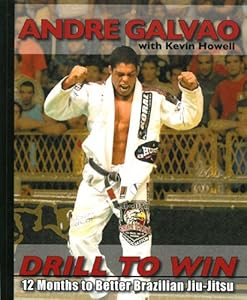
I would like to thank Andre Galvao for his time and teaching today.  I'm looking forward to adding the lasso guard to my game and am less afraid of inversion than before.  I'd also like to thank Tim Sledd for again organizing a great seminar.  This is no easy task and his guys may not know how lucky they are that their instructor routinely brings in high-level competitors who can also teach.  I'm also happy that in addition to learning and a photo opportunity, I got an autograph in my copy of:

2.25.2013

Machida's foot sweep

Is a thing of absolute beauty.


2.21.2013

The Amazing Spider-Man

The Spider-Man Drill should be familiar to all serious grapplers as an attribute and strengthening drill.  To recap take a position on all fours (without knees touching).  Your hands are roughly under your shoulders and your knees under your hips.  Imagine if you will your friendly neighborhood web-slinger clinging to a building but with less action-oriented posing:
To do the drill, lift one hand and replace it with the contralateral foot.  This should rotate your abdomen from facing the floor to facing the ceiling.  Each time you move you will switch the position of one hand with the contralateral foot or vice versa.  Your head should shift 90° in the hortizontal plane and your belly button should rotate 180° in the vertical with each limb switch.
I have recently begun to experiment with variations of the Spider-Man Drill to make it more challenging.  One simple principle is to use an odd number of switches in the same direction, e.g. 1, 3, or 5 clockwise or counter clockwise, and then adding exercises in between.  For example, walk (using all fours) from whatever position you end up in.  Or extend one leg inferiorly dropping first one hip to the floor and recovering, then the other.  Another drill that you can attempt is to add a series of exercises after each series of switches.  Today I placed my fitness ball to my right when I was in the downward Spider-Man as well as making sure that my Wavemaster Bag was in front of me.  Using a three Spider-Man switch I rotated through:
  1. Belly up, feet toward fitness ball: Dips with feet on fitness ball x10
  2. Belly down, feet toward Wavemaster: Feet elevated push-ups x10
  3. Belly up, head toward fitness ball: Place back on ball, alternating marching step x10 e/
  4. Belly down, feet away from Wavemaster: Hindu push-ups x10
You've just gone round the world with the Spider-Man drill.  Now let's do a more challenging variation.  Place a Bosu ball, sunny side down.  Again using a three Spider-Man switch and being careful to avoid the Bosu ball, I rotated through:
  1. Belly up: V-sits on inverted Bosu ball x10 (hint: slow and don't jerk)
  2. Belly down, feet toward Wavemaster: Placing myself in a push-up position with my hands on the Bosu and feet on the bag stand, try marching in place x10 e/
  3. Belly up: Place your hands on the Bosu ball and move your rear away from it so that you can perform dips x10
  4. Belly down, feet away from Wavemaster: Push-ups on the Bosu ball x10
I would like to explore the possibilities of using either ankle/wrist weights or dumbells to intensify the Spider-Man drill, but that will have to be another work-out.  I have held pad rounds while people did the Spider-Man drill as a conditioning exercise but also to expedite ground-n-pound striking, however my goal here was solo drilling, perhaps I can hit the bag...


1.18.2013

"A good plan violently executed right now is far better than a perfect plan executed next week." -- George S. Patton

Planning is simultaneously important and futile.  Important because it is critical that we examine what we intend to do and make the best prediction as to how we might accomplish it, but futile because no matter what we won't see all the variables and the other guy (the competition) has a bad habit of not following the plan rendering it less than completely successful.  Victories are won by planning more times than they are by improvisation, but adherence to a failed plan in absence of free thought has also led to far more losses than improvisation ever has.  Plans are like cookies, they should be made, must be made, but should be discarded if they get burned or go bad.
Looking back at my competitive career, I have been a far more careful planner when it came to striking (muay thai and mixed-martial arts) than jiu-jitsu.  Perhaps this is an artifact of competing in many more sport jiu-jitsu tournaments than muay thai or mixed-martial arts.  Things that feel more routine require less planning.  However, at the higher levels of competition, every competitive edge and especially planning becomes more important.
An important aspect of being "game" is willingness to enter the fray or the joy of locking horns.  Too often, and I see this in myself, planning is a list of reactions to what the other guy does.  To quote Marcelo Garcia, "Play your game, don't worry about what the other guy does."  If something doesn't work you have a back-up to that, but don't wait for your opponent to do something before you.  This isn't an conversation, it is not even an argument, you are giving a lecture and maybe you will grant your opponent a few questions at the end after your presentation is complete,
To that end I have designed a first draft of a Brazilian Jiu-Jitsu / Sport Jiu-Jitsu / Submission Wrestling Game Planning Worksheet.  It begins with a goal statement describing what tournament this is for.  It then has brief section on the stand-up phase and how you intend on getting the fight to the mats and where you would optimally like to be when that happens. You then describe how you would attack from your goal position followed by the position you think is the back-up or most likely position you would end up in when not in your best position.  Then you review what you would do if you screwed up, i.e. what happens if you make a mistake and end up in the position you hate most.  Here you describe how you would escape and get back to winning the fight.  Finally you should list two variants to attacks you described earlier in your plan as well as three things you need to improve on.

1.12.2013

Building a Simulation Drill

Technique does not make competitors, drilling does, but a place on the podium is earned by sparring in the gym.  Recently I discussed different drilling formats.  One type was the simulation drill, an interaction with your training partner suggested by what happens in non-training situation.  In sport jiu-jitsu it doesn't matter if you get on the podium by a single advantage or by submitting your opponent, different medals are not awarded for different types of wins, and first place is only earned if you don't lose.  Pressure in Brazilian jiu-jitsu wins fights.  Pressure is exerted by superior position, i.e. points, and pressure leads to submission.  You can be down on points and win by submitting your opponent, but if you're ahead (and you don't lose your head) in general you will have more opportunities to submit your opponent because you have superior position. Superior position has an associated point reward.  I think it is important to look for points and go after them, without losing sight of the submission or losing position for a submission attempt.
Example of sport jiu-jitsu openings and points awarded
From this schematic we can list the positions and point deficits that you could find yourself in, if your fight doesn't go your way.  These are listed below.

Guard / Half-Guard

  • Not down points
  • Down 2 points
  • Down 3 points
  • Down 4 points
  • Down 5 points
  • Down 6 points
  • Down 9 points

Side Control

  • Not down points
  • Down 2 points
  • Down 3 points
  • (Down 4 points*)
  • Down 5 points
  • (Down 6 points*)
  • (Down 9 points*)
*An opponent can transition from a mounted or rear mounted position to side control due to a scramble or feeling of greater control.  No points are awarded for either side in this case.

Mount / Rear Mount

  • Down 4 points
  • Down 6 points
  • Down 9 points
Based on this list we can design drilling scenarios.  For example, starting from the guard and being down two points with two minutes on the clock.  Thus the top player who is up two points might chose to stall, forcing the bottom player to look for a sweep and pass.  Or the top player may feel that a two point lead is to shallow, and strive to increase that margin.  Or either player might go for submission seeking to end the action.  Note that the behavior of either player should be affected by the position, point differential, and time remaining.  Being mounted and down six points should produce significantly different strategies than being no points down in the guard.
These simulation drills can be arranged a number of different ways.  Preselected time periods of 1 to 5 minutes could be used or they could be randomly selected by rolling a die.  Cards with position and point deficit so that these might be randomly selected can be found here.  Alternatively they could be prearranged, working on the guard for one training session and side mount another.  It should be noted that it is more likely that a narrow point differential exists with more time in the round remaining than a large point difference.  While I think it is important to drill pure escapes, there is a difference in strategy and energy usage when you simply escape versus having to escape and make up a point differential.
While we do not want to train our athletes to expect that they will be in a bad position, knowing how to deal with it if this should happen is important.  For me, I drilled from bad position was a way to work on conditioning and to work on my confidence.  If I knew I could deal with a mistake, I felt more confident taking even the small risks needed to attack an opponent.  Furthermore, this is a series of tutorials in the scoring system, how long it takes to score points, and strategies for scoring those points.

Unbeatable

I have been doing martial arts for a long time.  Through years of intensive study, I have found certain tricks...er...techniques to make you unbeatable.  Granted you sacrifice things like improving or winning but at least you can proudly state that you never lost

  1. Apply a sparring filter.  Whenever the opportunity to apply and test your skills presents itself, find an excuse not to wrestle, roll, spar, whatever with anyone who is bigger, younger, more athletic, or experienced.  Choose small, injured, white belts/novices for your partners, until they improve too much.  Be careful not to call attention to yourself by beating them so badly that they complain or get injured.
  2. When the pupil searches, the teacher will appear.  If your filter fails, fall back on this strategy: if they have more experience than you, just as you are about to eat a punch too much or get submitted call a pause to the action and seek their guidance.  Ask them what they did, ask them to demonstrate it, ask to try it yourself, i.e. anything to eat up the clock.  If you have more experience than them and they are suddenly doing a little too well, stop them and correct their form.  Explain what they were doing wouldn't work and had they done it another way they would have finished you for sure.  Eat up the clock if you can and be sure to reset in a neutral position.
  3. Knowing is half the battle. Prior to your round mention your age (older or younger), conditioning level, preexisting illness or injury to your opponent.  Do it firmly but softly.  If your partner has any human feeling they will lower their expectations and you can blitz them early to obtain an advantageous position.  If they manage to get ahead, cry out and blame the excuse from earlier, i.e. a lack of conditioning, a recent upper respiratory tract infection, or aggravation of a preexisting injury to stop early.
  4. Resting is training, too.  This works particularly well if there is an odd number of people training.  Be sure to vanish when ever drilling, rolling, or sparring is to start, this will allow you to skip the first round.  After this round has begun, position yourself strategically in the instructor's blind spot, you will be able to let your team mates tire themselves out.  When the coach finally spots you, you will have an advantage over everyone else.  Be sure to sit out as often as possible, or better yet, find a partner to alternate rounds with one guy who stays out every round.
  5. Psy-ops. These are advanced level techniques which take years to develop. They are not for use by the inexperienced:
  • Humor: If you are funny guy, crack a joke so hilarious that you partner loses it.  If you are not, start laughing hysterically at something somebody says, pausing the action.
  • Chemical warfare: Carefully prepare training gear by using it and never cleaning it, until it starts having a heady aroma of devastating body odor and cat urine.  If you are stinky, nobody wants to get close to you.  If they can't get close to you they can't win.
  • Be helpful: True story, one of my training partners actually told his opponent while they were grappling that it was against the rules to knee bar.  His opponent thanked him, let go of the knee bar, and subsequently lost the match on points.
  • Bathroom emergency: Without explanation make a sudden bee line for the bathroom.  Hide in the bathroom for several minutes and return with some toilet paper hanging out of your gear.   Attempt to restart with your partner, in a neutral position, of course.

12.07.2012

Three Half-Guard Sweeps

"Pump Handle" Half-Guard Sweep

From the same side under-hook half-guard, prop yourself on your free elbow or hand  and grab their far  gi such that your body is snug with theirs.  Now use your prop hand to grab their far sleeve.  Use your top leg to overhook their near leg, then transition to your knees, dragging their leg away from them.   Pass their far arm, which you gripped earlier, between their legs to your other hand, creating a "pump handle".  Use your freed hand to grab cross collar and pull turning them on their side and allowing you to obtain cross-side position.

Half-Guard to Far Single Leg

From the same position as above but your opponent has placed you in a whizzer, switch your top leg to overhook their near leg.  Now use your pivot hand to hip switch, pulling your lower leg free.  Drop your underhook hand to grab their far leg's toes and your pivot hand checks their knee, drive forward to place them on their back.

Inside Arm Wrap Half-Guard Sweep

If your opponent is savvy to the above, grab their sleeve with your under-hook hand, wrapping their arm around your elbow.  Overhook their leg with your top leg, then pivot out freeing your bottom leg.  Reach for their far knee with your free hand, most likely they will straighten this leg, i.e. "sprawling" to prevent being taken down.  Now dive underneath pushing on this leg to sweep them over you to low cross-side position.

11.17.2012

"Megaton" Dias Seminar -- "I hate to lose, but I love to compete"


Me, newly promoted black belt Bryan Hefner, Jack McVicker, Wellington "Megaton" Dias, Brad Peplow, Kyle Watson

I attended the "Megaton" Dias seminar hosted by Jack McVicker.  As always Megaton is impressive with not only his technical knowledge but ability.  He talked about competition and that it is important to know the rules, to know how to most optimally play the game.  Despite how boring a 3-4 hour rules meeting is, it is important to attend these to know exactly how the game will be played and how the rules enforced.  With even small point differences determining championship outcomes, detailed and comprehensive knowledge of the rules can mean the difference between a strategy that earns first and second place.

He further discussed that knowing a whole lot of technique is not difficult, a few days of instruction would cover the known syllabus of Brazilian jiu-jitsu.  However what separates a white belt and black belt, and an average black belt from a recurrent world champion is rolling and drilling to refine the application of the technique.  It is this that takes years to develop.  Megaton, as coach who himself lives, breaths, and eats competition, he wants to make everyone a world champion, but with time has learned that the individual athlete, with the desire to be a champion will be the one that does so.

De La Riva Pump Handle Sweep / Gun Turret Sweep
From De La Riva guard versus either a seated or standing opponent, control the hook side ankle with your same side hand and grab their opposite sleeve with the other.  Push their leg not controlled by the hook back with your free foot, lengthening their stance.  Sit up and pass the sleeve control to your other hand, releasing the ankle grip, creating the "pump handle".  If they have caught your pant leg free it by extending the leg while maintaining control of the sleeve.  Grab their ipsilateral collar with your freed hand.  Pull down with this hand, as you lift with your hook and other hand, sweeping them laterally.

De La Riva to Leg Underhook Sweep
From the same set-up as above, use your free foot to push their leg back, to create space, then unhook your foot and pass it medially inside your opponent's leg (and arm if they are controlling the gi).  Bring your entire  leg underneath their leg and overhook their ankle with the same side arm.  Replace your hook on their medial thigh, with your knee on the lateral side of their leg.  Use this hook to elevate as you pull down on their sleeve, again sweeping them laterally.

Megaton's Standing Pass
From the close guard, control your opponent's lapels and pin them to the axilla bilaterally.  Stand up in the guard and place one knee between the "cheeks of the butt" so that the knee passes as freely as possible, you want to end in a knee up, staggered kneeling position.  Obtain cross collar control with the hand of the vertical knee.  Roll your knee to the ground, over their thigh, going parallel with your controlling arm, you can help open the guard with your free hand.  As a courtesy to your training partner, attempt to maintain their ball integrity as you drop the shin across.  As you come forward, your arm drops across their neck, stapling their chest to the mat.  Use your free hand to pull up on the their sleeve on this side and step your rear leg over their trapped leg, before baseball sliding through.

Standing Pass Variation (Inferior Heimlich Manuever)
If your opponent's guard is too tight to get the knee in, presumably due to a leg length differential between the two of you, grab the gi pants and push down on his lower abdominal muscles just medial to his hips.  Keep your legs wide and/or staggered to prevent your opponent from sweeping you.

Ippon Seoinage (Up Yours Hip Toss)
Control the gi at shoulder height ipsilateral to their same level gi control.  Your arm can be over or under theirs (although I preferred over).  Pull them medially with your arm, so that you meet when you spin inside, shooting your other hand fist up pinching their proximal arm between your forearm and inferior deltoid. Pull down with the gi control hand, wrapping and trapping their arm.  You should be using their arm to throw the universal sign for "Up Yours" with your fist.  Your butt should hit their same side hip, anteriorly, and then you bend forward throwing them to the mat. 
Megaton is not a proponent of dropping to the knees a he feels that it is too easy to take the back and he has lost mobility once he has hit the ground.  He discussed but we did not practice a variation where he squatted low enough to lift his opponent with his hips by going between his opponent's legs.

Fake ippon seoinage to lateral double leg
Setting up the throw as above but when you spin, "miss" the butt to hip contact and spin through, under their arm so that your are perpendicular to their side, head in front.  Now shoot for the double with your anterior arm catching their near knee and your posterior arm catching their far knee.

Spider guard to X-guard Split Sweep
From any variation of spider guard with one foot in the crook of the elbow (cubital fossa), catch their heel opposite, and bring the leg inside and behind them before setting up the high hook, foot anterior to the inguinal area of the X-guard.  Overhook the trapped heel with your arm and then place your low hook, just posterior to the back of their knee (popliteal fossa).  Retain control of their gi sleeve on this side.  Extend their stance and sweep them laterally by pulling the arm down.  If they don't extend you can release the lower hook and push with the bottom of your foot on the inside of their thigh.

Reverse De La Riva Timing Sweep
You are on your hip just outside their leg, the hip you are on has your leg going on the medial side of their leg with your hook on the lateral part of the thigh.  Your other leg can push on the same side hip or be tucked supporting your hook.  Control their collar on this side with your same side hand, while controlling the far sleeve with your other hand.  As they go to slide their leg through to pass, elevate the hook as you bring your hands inferiorly toward your feet.  This should throw them over your shoulder on the same side you are posting.

Reverse De La Riva to the Back
From the reverse De La Riva above, place your posted hip side hand on the lateral side of their ankle and your other hand has a cross hand grip on the collar.  Pull them forward with this hand, and dive your head between their legs, coming out the back door.  One hook on the side you had ankle control should still be inside.  Underhook, from behind, this ankle with your arm, and push forward.  This should allow you to scramble forward to take their back.

Sweep to 50-50 Guard
Your opponent passes your spider guard by controlling and stepping past the leg not controlling the cubital fossa.  They remain standing but in such a way that they could take knee on stomach.  Bring the leg on this side between their legs and then medially so that you wrap the near leg.  Reposition them as necessary with the cubital fossa control to do this smoothly.  Now readjust your the leg on this side to lasso guard the arm, pulling down and putting lateral pressure with the shin.  Pushing diagonally with the wrapped leg and lasso guard arm, sweep the backwards into a straight ankle lock position.  This is the 50-50 guard -- "50% chance you will submit him, 50% chance he will submit you"

Straight Achilles Lock from 50-50 Guard
Roll to your shoulder so that you invert their foot and wrap the ankle with your arm, grabbing your lapel.  Now roll the opposite way, up to your knees, placing their knee on the floor and their lower leg perpendicular to the mat, then arch to finish the lock.

Achilles Compression Lock from 50-50 Guard
To avoid the straight ankle lock, your opponent triangles their legs.  Push on the thigh, just distal to the knee, to expose the triangles ankle.  Place the blade of the same side hand behind their Achilles tendon and then Gable grip your hands to apply pressure on the tendon.  If their triangle is loose you may get a calf compression effect instead.

Crab choke
The crab choke (at least the no-gi variation) has stirred up controversy after the match between at Augusto Tanquinho and JT Torres at the 2012 No-Gi Worlds, so Megaton thought it was best we covered it.
Your opponent is attempting to pass by underhooking both your legs, as they do this you grab the same side of both collars with your thumbs adjacent to the carotids on both side.  Now scissor your legs (crossing the ankles), placing pressure with the thighs into your fists into their neck bilaterally to finish the choke.

Loop choke
From half guard with your knee in their chest, use the hand on this side to get a loose cross collar grip.  Drop this leg out, allowing them to fall forward, shoot your other hand in, behind their head, inferior to the dome of the skull, and place the back of the hand beneath your distal arm, just proximal to the elbow.  Reestablish the leg you moved with the foot back in the hip.  Drop the elbow of the arm that is over the back of the head as you pull the gi collar up and across.

11.10.2012

Propped choke series

From the guard, prop yourself on one elbow in order to feed the cross collar grip.  Drop back to the mat while simultaneously pulling your opponent's elbow on the same side as the cross collar grip away from their body.  Put your foot in the hip in this side and pivot, bringing your other leg across their back.  Cross collar choke by grabbing the fold of the gi opposite your cross collar grip.  You can also transition to straight arm bar, if their elbow remains lateral to your leg.  Since you are leaving the the cross collar grip in place you can choke by placing your opponent in the straight arm bar position and providing counter pressure with the legs.   If their elbow moves medial to your thigh, choke with a reverse triangle, using the cross collar grip to provide pressure with the triangle.

11.09.2012

Punishment Performance

I have been looking for ways to challenge myself.  Not because I believe my skill set so superior that I'm bored, but because as I get older, with more real life on my plate and a greater history of injuries, I find myself rolling or sparring not to improve myself and become competitive but to not to lose.  I have enough athletic talent and skill to "weather" almost any storm, but surviving is not a pathway to improvement it is a slow descent into mediocrity.  It is treading water rather than swimming toward a destination.  It is a lack of goals.
I have therefore proposed a scheme for myself when grappling with others.  I will approach each partner as a challenge, based on their relative ranking.  For each partner I will attempt to submit or score points equal to an a priori total.  I will, of course, use strategy and technique coupled with but hopefully not dependent on athleticism.  Failure to meet a goal after a round, results in push-ups, say a set of 20 regardless of how many points I was short.
My goal is not to steamroll my training partners but to break my habit of a stalling.  To attack with intent not only to win but of improving game.  To look for points and find ways of earning them.  Not every round or every day of training needs to be this way, certainly days spent isolating a position or submission set are just as valuable but do not change behavior.  This way I am pushed by the clock, and hopefully will start making my game more dynamic.

Belt RankSubmissions/Points
White
(Rank - 4)
4 Submissions,
3 Submissions and 4 Points,
2 Submissions and 8 Points,
1 Submission and 12 Points, or
16 Points
Blue
(Rank - 3)
3 Submissions,
2 Submissions and 4 Points,
1 Submission and 8 Points, or
12 Points
Purple
(Rank - 2)
2 Submissions,
1 Submission and 4 Points,
or 8 Points
Brown
(Rank - 1)
1 Submission or
4 Points

10.18.2012

Another Pass

Today I saw a pass that fits in well with the passing game I saw this past weekend.  From half-guard, grapevine your opponents leg with your arm on the trapped leg side.  Use forward pressure and then raise your chest while simultaneous using your other hand to rip their knee down, sprawl on top of this now horizontal and collapsed knee. Now using low hips and shoulder pressure on their legs start walking toward your free side and around to control their head and pass.

10.14.2012

Team McVicker Brazilian Jiu-jitsu Fall Camp Day #2: Time Keeps On Slipping Into the Future

Hooks Inside Sweep Game

Day two started with Brad Peplow teaching his hooks inside sweep game. He started from the last moment that he could initiate offense, that is once your opponent has lowered their weight inside your guard.  The first step is to place your hand on your abdomen, just superior to their head.  Now hip bump and slide this hand under their neck.  Frame to start opening space.  Now post to your other elbow and scoot your butt away from your opponent, then post your hand and scoot further out.  You have now gotten far enough away that your opponent cannot simply flatten you to the mat, release the neck frame and underhook with this arm.
  • Elevator - Overhook your opponent's opposite arm, keeping your head on this side.  Now roll to your side and shoulder on this side, as you lift (elevate) the leg on the underhooking side.  Turn your opponent over and shift into side-mount position.
  • Two-on-one reverse elevator - In order to defend your underhook, your opponent reaches over your arm on the sameside and grabs your lapel, grab his distal sleeve with the opposite hand and proximal arm with the same hand and detach their grip.  Pull forward and across your body.  They will resist by attempting to stay upright, as failure to do so will allow you to take their back.    Drive their hand to their opposite hip, grab across their back with the former underhook and lift them with same side leg sending them over your side.
  • Overhook counter - If your opponent overhooks your arm, use the opposite hand to grab his sleeve, preventing him from posting with this side.  Now lift with the hook on the trapped arm side.
  • Hip twist - In an attempt to defend the two-on-one reverse elevator your opponent drives across your body.  Drive his wrist to his far hip, straighten the hook on this side, behind your opponents opposite thigh, undo the other hook and essentially reguard around on of their thighs.  Now twist your knees away from your opponent, rolling them to their back.
  • Hip twist counter sweep off leg post - If they defend by attempting to post to the free leg, underhook it and lift to finish.
  • Hip twist counter sweep off arm post - If they defend by posting to the free arm, cup it medially and reverse the knee twist in the opposite direction.

High Single Leg

Next Jack McVicker was back to show some of his stand-up game, specifically the high single leg takedown.  Jack advocates mirror image stances but with your foot just lateral to theirs.  Now either with a lapel grab or as a push, apply brisk, pressure to the upper pectoralis major muscles on the same side as your arm.  Simultaneously reach and snatch their knee on the inside with the other hand.  Pinch it between your knees, apply strong forehead pressure to their pectoralis major muscles, and bring the outside (lateral) forearm underneath their knee placing this hand, palm down, on top of your other (palm up) hand.
  • Treetopper spin - Open your pinch knee stance, reach the inside hand to their heel, clasping the leg at knee and heel.  Use your knee on the heel clasped side, to elevate the leg and then underhook it with this hand, try to bring your hand up behind your head.  Now step in as you pivot toward their chest, reaping with the posterior leg, taking them backward and down.
  • Lateral double leg conversion - From the position described above, prior to the treetopper, drop your weight forward as your reach for their far leg, palms down, with the bottom hand cutting into the hamstring ligaments, clasping the hands at their knees.

More Art of Uncomfortable

Lastly, Jeff Serafin closed out the camp with further discussion of his Art of Uncomfortable passing style, this time discussing the half-guard and attacking with the kimura.  He first presented two ways of using hip pressure to pass the half-guard.  First, move your free knee around their knee on the mat.  Now push forward into their upper leg, displacing it then shift past it, dropping your weight hard across their abdomen flattening them to the mat.  If this doesn't work, rotate your body toward their head, and then twist back again across their body.  In the first set-up you will most likely overhook their far arm.  In the second your arm will end-up next to their far flank.
The kimura set-up occurs off the overbook, as your opponent tries to reposition the hand across your neck.  In this case, trap it with the overbook.  Control their far knee with your free hand.  Shift your hip superiorly toward their head and away, eliminating their ability to hip bump.  Now set the kimura and use a hip rotation, rotating your top hip down toward the mat to drive their arm into kimura position.  If they attempt to hug too tight for the overhook trap, simply free your knee and drive it to the mat on the outside of your opponent's thigh.  Climb up their arm, trying to place you belt knot on their far shoulder, take the inverted armbar.
If your arm is not overhooking theirs, again shift your hips superiorly and away, then free your knee.  Now sweep your arm superiorly pushing their arm toward and over their head.  Now drive your knee to the floor, further increasing the pressure of their arm across their face, allowing you to free your foot and taking the amount.  Their arm should be wrapping their head, allowing your to attack for submission.

10.13.2012

Team McVicker Brazilian Jiu-jitsu Fall Camp Day #1: The Art ofUncomfortable

Guard Passing Hip Pressure Concepts

Day one of the training camp started with Jeff Serafin discussing guard passing concepts, specifically hip pressure and how aggressive but controlled hip drive was essential for guard passing while eliminating scrambling during the pass.  Jeff covered three guard passes to illustrate his concept:

  • Same-Side Knee Pass - Start with one knee up and control your opponents legs, roll your knee to the same side, over their thigh to trap the leg.  The key here is to bring the hips in and drop the weight.  Your hip line should be parallel to inguinal (groin) line of the trapped leg.  Pivot step out to free your leg and before releasing the hook.  Again the hips should slide in close to prevent your opponent from moving.
  • Over-Under Pass - Staple one leg to the ground with the same side hand, simultaneously drive the hips forward as you underhook their leg.  Driving in the hips should raise their leg, not your arm, your want contact with the proximal calf and thigh across your body, your hip should be on their hip/buttock.  Your hip line should be parallel to their pelvis.  Use your free hand to control the cross collar, and then continue to drive forward using the pressure to drive their leg out of the way.  Your hips will slide past their hip and you will establish control.
  • Leg Ride Pass - Start just far enough away that you can grab your opponents ankles from forward leaning squat position.  Lift them up as you step in, a lá a penetration step in wrestling.  One knee should, on the knee, land parallel with their flank while the other remains up and behind their legs, pinch inward with your legs.
This pressure concept is not exclusive to these passes but rather a fundamental concept that can be applied to passing the guard.  The key is to drop, close, tight hip pressure, using the line of the pelvis as a target for your hip line, either over their leg or posterior-lateral to it.  They should not be able to bridge, let alone move, unless it opens the side-mount, mount, or rear-mount positions.  I had the chance to grapple with Jeff later and he applied this concept, it kind of felt like he was running me over, slowly, with a Mack truck.

Inverted Armbar Variations and Applications

Next I covered secrets from deep within the Advanced Techniques Division of the Jokerjitsu Dojoratory, specifically inverted armbar variations and applications.   The inverted armbar, or ude gatame, is a straight elbow lock typically applied to the ipsilateral (same) side.  I started using it more in my guard game when the yield of my contralateral or cross body techniques (e.g. straight armbar and triangle) started to diminish.  One of the reasons that it may be effective is due to my ectomorphic body habitus, opponents reach to control the lapel or head, extending and straightening their arm.
I initially experimented with positions that I could obtain the inverted armbar submission, and have had success with the guard, half-guard, half-mount, side-mount, and full-mount positions.  After the “tap out” yield diminished I began looking for what happens after the inverted armbar, i.e. what reaction this attack provoked and what the next attack in my sequence should be (perhaps something I should have done when my other techniques began to “fail”).  I have more recently started looking into the grips and frames of reference for more rapidly setting up and finishing the submission.

Key Points

At the cost of stating the obvious, you must extend your opponent’s arm for this to work.  This either means you grab their arm and force it straight or by aggressive positioning your opponent presents a straight arm.  This means you need to be looking for opportunities to attack their elbow and moments where they post or grab with a straight, or nearly straight arm.  There are three points of control required to apply the inverted armbar:
  1. You must isolate the shoulder, typically abducting or adducting while simultaneously extending the axillary joint.
  2. You must simultaneously control the forearm distally, near the wrist, typically near your humeral head or tucked into the crook between the neck and trapezius.
  3. Finally, you must control just proximally to the elbow, with whatever grip (see below) is most suitable.  You want to be near but not on the elbow to apply leverage and still retain control of their ability to roll the elbow.

Evolution of the Grip

One of the greatest difficulties with the inverted armbar is controlling the elbow so that your opponent cannot rotate their arm and free themselves from the lock.  Over time I have tried different methods of controlling and submitting the arm. Regardless of the grip, distal forearm control is essential, however control of the shoulder is less critical.
Your grip selection will largely depend on position, that is the relation of your opponents elbow to your “peanut butter jar” zone, the area where you feel your ability to hold and manipulate is strongest, i.e. the place you put your hands when opening the lid of a peanut butter jar.  This means you will move their arm, your body, or both to obtain this position.  However, some grips are more suitable depending on positioning and hence must be used accordingly.
  • Hook grip: I started with just grabbing or cupping the posterior side of the arm at the elbow and pulled the arm straight.  It was simple, but low yield.  It is however probably the most versatile way of at setting up the inverted arm bar regardless of position.
  • Wrist square:  In order to decrease the strain on my hands while putting a hard surface (my wrist) into a soft spot (their elbow ligaments and triceps’ tendon), I switched to a perpendicular thumbless grip driving my wrist into the soft spot on the humerus just proximal to the elbow. Because you need to bend your arm to get bone to soft tissue alignment, this is a shorter range grip than hooks or our next method.
  • Pipe Wrench”: This is simply applying a thumbless grip and pinching the distal humerus and elbow joint between the vice grip of your wrist bones. You can twist the arm allowing for more rapid and greater control of the direction of their elbow.  Essentially I am applying the two-on-one strength of a locking my hands together with the concepts of Filipino Dumong to twist the arm straight.  I set this up with my ipsilateral side being palm facing me and the contralateral palm facing away from me.  Because the angle between your forearms in the thumbless grip increases as your hands get close to your body, this works only at longer range.  Also, because your hands lock together you cannot reach as far as with the hooks above. 
  • Deep Figure Four: A variation of the wrist square, with the intent  of having more control of the your opponent’s arm.  Here I attempt to get the distal part of the humerus in front of my ipsilateral (same side) arm. I start the figure four by placing this hand on my opposite distal biceps and use the hand of this arm to grab my head. This is a shorter range set-up due to the proximity of the figure four to your body.

Inverted Armbar From the Guard

Traditionally, the inverted armbar from guard makes use of placing the foot on the hip of your opponent, on the same side you are attacking.  Your knee is adducted to control the shoulder with their wrist cradled between your neck and trapezius on the ipsilateral side as their arm.  In order to get here, I typically started with one foot in the hip and used the partial extension of this leg and my arms to pull their arm straight and away from their body.  Simultaneously I would rotate my body approximately 45° offline in the direction of their arm.  The shoulder control becomes less important with the application of the wrist square, pipe wrench, and deep figure four.  You can either go after the submission by pulling their arm into place or provoke them to reach for your lapel.
If your submission should fail, look at their reaction, they will typically bend their arm, either inferiorly setting up oma plata, or across their body, allowing your to go for cross body straight armbar, or taking the back by arm dragging.

Inverted Armbar From the Half-Guard (Roberto “Cyborg” Abreu variation)

Inverted Armbar From the Side-Mount
Using concepts from Lloyd Irvin’s Brazilian Jiu-Jitsu Micro Transitional Drilling System, as I pass I reach under their far arm to set-up an inverted armbar position.  I have been using the deep figure four position, you can sometimes submit them simply by applying pressure from this position, however it is low yield.  So you have options, such as
  • climbing forward, placing your shins across their abdomen and chest
  • rotating onto your inferior hip
  • as above but stepping over their head
  • placing the knee on the belly, and pulling up, this should rotate them on their far flank as you fall to your back

Knee On Stomach

Finally Jack McVicker covered the knee on stomach position.  The knee shin should be across the abdomen with your foot tucked to your opponent's flank.  The same side hand controls the hip near your knee by placing it on the floor or grabbing the kimono on this side.  The opposite hand controls the neck lapel on the near side.  Remember to post your other leg back and away, enough to give you a lot of weight on your opponent and so that they cannot grab that leg but not so far away that you are off balance and cannot move.  The attacks covered:
  • 180° armbar - your opponent tries to push your knee off them, creating an opening due to the bend of their arm.  Use the inferior side arm to hook this and pull up, placing them on their side.  Step your far leg to the opposite side of their body (their back) and grab their belt with your free hand.  Pivot 180° tucking your shin next to their body and your trailing leg across their head, ending perpendicularly to them.  Finish the armbar.
  • Baseball bat choke - Push their gi at the neck with the hand their, drop your opposite hand in and grab the lapel.  Your hands should touch as if holding a baseball bat. Drop your shoulder to their distal chest and rotate so that your are parallel and above their head, crossing your forearms and finishing the choke.
  • Brabo choke series - Your opponent underhooks your distal shin in an attempt to escape.  Drop back to the side-mount position and trap this arm.  Now free the far kimono and feed it under their far arm and behind their neck. Reach the inferior hand up to grip this and use your superior hand to reach across, securing the choke.  If they defend by "combing the hair" on the far side, use your blocked (superior) hand to pull them up on their side.  Drop your weight on this shoulder and pull up with your other hand, completing the choke.

9.02.2012

Mendes Brothers Seminar: Passing the Spider Guard

I attended a seminar today, by the Mendes Brothers, Gui and Rafael, hosted by Small Axe BJJ.  The focus of the seminar was the leg drag pass, their predominant style of passing the guard.  Their style is an antithesis to what I've been "raised", but as they are multiple time world champions and I'm not, I'm more than willing to give it a try.  Some initial concepts:

  • Squat position: The Mendes style advocates a squatting position while standing to pass.  Knees bent, low center of gravity.  This maximizes mobility and stability.  It is also a vigorous workout for your thighs and glutes if you are not used to it.
  • Active Toes: Another aspect of the Mendes style is always engaging the toes.  Rather than letting the dorsal foot lie on the mat, posting up on the toes.  They argue that they can create greater pressure and move more rapidly.
  • Learn the details slowly, but drill with speed and power: Take your time to make sure you cover all the details, however once learned, drill with the speed and power of competition.  Train like you fight.
They corkscrew their way to the pass, working first one way then the other, rather than trying to wear down their opponent like a steadily approaching glacier.  Their style takes three steps forwards, two steps back, to gradually work their way past your guard.  The hypothesis behind the leg drag position is that it is a more direct way to close with an opponent, rather than creating the large amount of space needed to go from guard pass directly to side mount.  It avoids the chase, by closing like a trap.


Spider guard pass #1
Your partner has gripped both your sleeves and has his feet in your cubital fossa.  Grip their pant legs, suck your elbows in, placing them in your "hip pockets".  Using the squat Mendes passing stance step backwards, bring your partner to a sitting position.  Roll one hand underneath their leg and to the medial side of their calf.  Now step laterally to the opposite side, rolling your partner onto their shoulder.  Pull the leg, whose foot is still in the cubital fossa to the opposite side.  Simultaneously close the distance, displacing their knees to one side with your body.  They should drape over your thigh, the knee should pinch down and inward.  The other knee should land at about their belt line at the opposite hip, also driving inward.  The shoulder on this side rotates to pin them to the mat.  Your head should be on the side of their face, on the same side as their legs.  Their shoulders are flat on the floor, the pinning shoulder hand can detach from the pant leg and rotate down to grab their belt, holding them.  You want intense pressure, made worse by corkscrewing your partner's spine.  Remember to post on the toes if your knee is down.

Spider guard pass #2
Using the same set-up as above, this time after you roll your hand from top to inside you want to break their grip.  Step your shin in against their forearm on this side and then pull back, breaking the grip.  With your free hand grab their opposite leg, make pressure, and when they attempt to push you back, drag the leg to your opposite hip, again setting up the leg drag position.  This time, we retain control of the leg with the pinning shoulder hand, and either regrab the other pant leg or grip the lapel.  The elbow is placed on the outside of the far thigh if you wish to take back.  The elbow goes inside if we want to take side mount.

Spider guard pass #3
Again from the set-up above, this time you circle your hands inside and underneath both your partners legs and lift.  Your want them posted up on their shoulders, but without having their feet on the floor.  Post one knee into their back. Drag their legs over this thigh and bring your other knee in as above, to set-up the leg drag position.

Spider guard pass #4
This is from the spider guard variation where your partner has placed their shin in one cubital fossa with their other foot in your hip.  Trap their shin by grabbing their belt on this side and creating pressure.  Push the opposite leg to the floor as you step to this side.  Now take two steps to circle in the direction of their shin hook passing that leg to the opposite axilla and then stepping in with your leg to begin the set-up of the leg drag.  Push their leg laterally with your head to complete the position.  I had to release my belt grip as I circled back because my wrist was in jeopardy of submission from my partner's thigh collapsing due to my pressure.

Once you have stabilized the leg drag position and your opponent has stopped fighting it is time to capitalize on either the side or rear mount positions.  Do not go for side or rear mount if they are moving, the small amount of room need to obtain position is the room your opponent needs to escape.

Side mount from leg drag
You have your partner pinned in a good leg drag position, the drag side is controlling the lapel.  Detach the pinning shoulder side, opposite the side their legs are on and obtain head control.  Go deep and clasp the uniform of their opposite shoulder.  Quickly move to side mount, in an "active toes" position with the knees tight.  Their arm should be displaced so that your hip is in their axilla, propping them on your superior knee and then propping your head control elbow on your thigh.  Your inferior knee and other elbow control the hips respectively.  Use your free hand to control the far arm.

Rear mount from leg drag
From the leg drag position, the side opposite the drag side underhooks and grabs the collar.  The leg drag side controls their biceps.  Pull their arm in on the leg drag side as you prop them on their side.  Bump their arm on the underhook side up and place your chin on their trapezius as you secure the seatbelt grip.  Slide your knee from the over the shoulder portion of the seat belt in behind them and pull them to rear mount.

The Mendes Brothers advocate using the thumb in the seat belt grip.  Thus the underhook grabs the opposite wrist with the thumb and attempts to conceal that hand.

A quote from today: "Passing the guard three times doesn't mean I did a good job.  It means I need to work on holding my opponent. I should pass the guard once, obtain side mount, mount, or rear mount, and then attempt to submit him."


8.21.2012

Rolling and sparring isn't drilling


I love rolling and sparring.  Here  I can test myself, trial new techniques, and validate that all my practicing really works.  This is also when I lie to myself.  I adjust my game to my training partner and my level of fatigue.  If I know he's tough I may try to go to a position of advantage rather than working on the goals I set myself earlier.  I will, consciously or not, adjust my training to win rather than improve.  Thus sparring, the fight within the gym, does not benefit us as much as specific drilling for improvement or competition.  
  • Even Start Drills - Anytime you start in a position that both partners are both offensive and defensive, but not in a normal start position.  The goal is to control this position and improve upon it.  Examples include, passing the guard (BJJ), pummeling to takedown (wrestling), grip fighting (judo), and knee play (muay thai).  The drill can be cycled so that it resets once someone gains the upper hand or simply continuing play once out of the position.  This should of course be prearranged.
  • Uneven Start Drills - Anytime either you or your partner starts in the advantage position (i.e. offense) and the other starts in the disadvantage position (i.e. defense).  The goal here is to teach the offender to finish and the defender to escape.  Given equally skilled partners, the partner in the advantage position should "win" more often than not.  Examples include escaping the side mount / mount / rear mount (BJJ), defending the submission (BJJ), defending the takedown (wrestling) and two-on-one knee play (muay thai).
  • Reaction Drills - Any drill that involves developing speed and coordination by having a one-point "win" rule.  The "win" resets the round.  Examples include first takedown (wrestling), first point (BJJ), steal the tail (BJJ), shoulder /  knee tag (muay thai), or the Shiv game (MMA).
  • Simulation Drills - Any drill where we try and take a specific situation, generalize it, and model it.  With repetition we hope to understand and dissect a situation that causes us problems.  For example, examine the beginning of the fight by sparring for 15-30 seconds to see how long that time period is and what can happen in it.  Other examples include, front hand sparring or grappling only with the figure four submission.
  • Shark Tanks - Uses any of the drill classes above and keeps one partner in with several other (fresh) partners.  This will tire the more skilled / stronger players and force them to work as efficiently as possible while increasing the chance that those with inferior attributes can press the action on them.  You can further complicate the drill by switching between drills for each partner, increasing the "fear of the unknown" for the fellow in the tank.

8.15.2012

Chess Puzzles

My father was an accomplished chess player who tried to instill this in his son.  Chess puzzles are the 2-, 3-, and 4- move combinations that should cleanly end in checkmate.  The comparison between combat sports, particularly sport jiu-jitsu, is often made.  The cerebral aspects of strategy certainly exist in both games, however in combat sports size, strength, speed, and athleticism can, and does, beat technique, skill, and tactics.  While the proper game will win chess, the proper game in fighting does not always end in victory.  The pieces and board of chess are equal the difference is only in the intellectual skills of the players.  Being mat smart is certainly an asset but does not guarantee victory.

However as a I play these puzzles I notice certain parallels between the mat and the board, between pieces and positions, in essence strategy can transcend the game:
  • Winning is based on a foundation of position - All chess puzzles are based on an end-game with pieces distributed in specific positions.  The a priori placement of the pieces predicate certain moves for victory.  In order to solve the puzzle some of these pieces may not change position but without their current placement, movement of other pieces would not insure victory.  In combat sports the relation of your body to your opponent makes certain attacks and counterattacks possible.  You cannot execute an attack without position, submission and placement are equal, the felling blow and footwork need each other.  Even if your legs and hips don't perform the motion of a kimura that your hands and arms do, the placement of your lower half is paramount for the submission.
  • Attack with intent, intending to defend is initiating defeat - The old adage that the best defense is a good offense holds true.  If you attack with the intent to finish, i.e. checkmate, you will placing your opponent in check for two reasons.  First, by forcing them to defend "check" they will change the configuration of the board to prevent losing now but increase the chance of defeat later. Second, they cannot finish you, if they are one the defensive.
  • Play one move ahead, allow one escape - We are told to think several moves in advance, which is extremely difficult given the number of permutations in what our opponent can do.  We can limit the number of moves we need to think in advance, by being one move ahead.  By being one move ahead you have already limited the number of options your opponent has available, making your calculations simpler.  When closing the noose of the endgame, we allow only one escape, this is the epitome of a chess puzzle, if the moves are done appropriately your opponent is not initiating moves nor even reacting, they are behaving in a predetermined way due to the rules of the game and what you did.  Your fighting should be the same, be that move ahead and recognize the hole for them to go through should your attack not finish the fight.
  • Victory can be solved by brute force or elegance - Sometimes the endgame is a series of captured pieces as we zero in on our opponent's king, this is brute force, literally battering our way through our opponent's defenses.  Alternatively the endgame can be elegant, placing pieces in jeopardy even as other pieces close in on your opponent's king.  The epitome of good gamesmanship the elegant solution is not better than the forceful one, both are needed, in different games to win.
  • You cannot win without risking losing - When completing the endgame pieces will be exposed to capture or you might be one move away from being checkmated, however as long as they are in checkmate none of this matters.  Woulda, coulda, shoulda, does not stack up well against done.  Often times when we fight, we worry more about losing than we do about winning, and this can be a detriment to performance.  To inflict harm, to attack, means exposing yourself to the same.  Your game needs to be strong enough to be aware of this and transcend it.

8.14.2012

A Guide to Belts in BJJ

A white belt is dangerous because they don't know they don't have a clue. A blue belt is dangerous because they have a horde of white belts trying to kill them. A purple belt is dangerous because they know enough to hang with the brown and black belts but still think they are competing with the blue and white belts. A brown belt is dangerous because they are trying to prove they are a black belt. A black belt is dangerous because you don't last that long in BJJ without picking up at least a small bag of wicked tricks.

3.15.2012

Levels, Lines, and Lies

Humans are kinesiphilic, that is, we are attracted to movement. Although as evolved omnivores we are not as bound to pounce on moving things like the more predatory common house cat, our focus is still drawn to that which moves. My infant has taught me this, all his toys move or flash lights. In a fight or flight situation, i.e. a fight, that instinctual ocular response is what provides information to the brain which then decides if we should move something in the way, move ourselves out of the way, or strike back. The fact that movement provokes response is also what makes us able to set an opponent up.
Think for a moment that if your athletic prowess was great enough and your technique sound enough, then you could strike your opponent when you wanted with what you wanted at will. Find a five year old, given that all your athletic gifts and experience should far exceeding theirs, there is little doubt you will win that sparring match, unless you are Kramer from Seinfeld. Most of the time our skills and athleticism do not significantly, averaged over the human population, differ from our opponents. Thus we must find other ways to win.
The first method for this is to switch levels. If everything you throw is at the same level, e.g. head, abdomen, or groin, your opponent learns their lesson early -- protect this area of my body and I won' get hurt. By simply changing the level, i.e. throwing to the body rather than the head with same combination, their learned response of protecting the head works against them. Switching levels when punching necessitates body movement, your knees have to rapidly bend and lower your body. When you tie kicking (no pun intended) in you, increase the complexity and number of leveled combinations you can throw. Level changes are simply the body versions of our regular, 1, 2, 3, and 4 striking combinations. Examples of level changes with kicking is using any combination you know and throwing the kick somewhere else, i.e. head versus body versus leg.
Another method is to switch paths, the linear versus the circular. Switching between using the linear arsenal of jabs, crosses, and tiips with the circular one of hooks, overhands, and round kicks means provoking the closing of one door by their defense while simultaneously opening the other. Applying less orthodox pathways like the uppercut, chop, or back fist to open defenses can be a third set of tools for landing telling blows. Pathway changes involve using a single or series of one class of strikes, i.e. four straight, triple jab, or overhand-hook-overhand, to equate movement with a direction of attack. This means that when you change your tactics, they still think movement means attack from a particular direction, but in fact you have now changed up the game.
A third methodology is faking. I have heard convincing arguments as to why faking is useless to useful. Those who don't endorse the faking method argue that they are not going to waste energy for strikes that don't do anything but rather throw combinations and by changing the texture of the strikes within it they provoke a defensive response, that is exchange high speed for high power. If their flick jab is fast enough to land great here comes the next blow. If not it made their opponent move, hopefully in such a way to make the next blow land cleanly. Proponents of the fake argue that by faking they are being more efficient, they use minimal energy to set-up their high yield blows. The faker has to invest in their fake. They must do something with an initial combination that "teaches" the opponent to do something defensively that places them in an optimal spot for another strike. Faker nay-sayers will argue that if your investment attack is so good at providing future dividends, why forgo its ability to do this by faking. Being a centrist, I would simply say learn both ideologies and incorporate as needed. The fake versus flick options include
  • Same side level switch: Fake the high or low line and then switch to deliver it. Shoulder movement is what sells the shot. Examples: fake high go low (jab, cross or hook), Superman punch, and electric slide
  • Same side pathway switch: Fake one path, take the other. Examples: Fake jab-lead hook, fake rear hook-laser cross, the Sidewinder (fake Thai kick-tiip).
  • Opposite side pathway switch: As before but switch to the other side. Examples: Fake lead hook-cross, fake rear hook-jab.

2.16.2012

Boxing and Muay Thai Agility Drills

Agility and speed often plateau in combat sports because of sequential optimization of different organ systems. At first we are training our central nervous system to efficiently perform the movement, thus as we learn we get faster. Simultaneously and subsequent to this we gain strength and flexibility further improving our agility. Eventually we reach a point that our current fast twitch and stabilizing muscles are no longer taxed and are therefore no longer developed. Thus we must find other activities such as strength and conditioning or athletic training to further improve our combative agility.
Each round was two minutes split into four 30 second phases. It is important to find a line, seam, or piece of tape to use on the mat.

Forward Movement with Focus Mitts
Rapidly step forward over the line, left foot, right foot and then back left foot, right foot. Repeat for the duration of the first phase. Then immediately go into a boxing pad round, except at the end of each the holder tries to kick your leg. After 30 seconds resume stepping but this time initiate with the right leg. The last 30 seconds is a repeat of the first pad phase. This should enhance your ability to enter and exit rapidly, as well as leg evasions.

Lateral Movement with Focus Mitts
This time rapidly step laterally over the line, going left: left-right-left and going right: right-left-right. After 30 seconds go into a pad round, but this time after each one the holder gestures in a direction and you must slide step in that direction. Repeat the lateral stepping in the third phase and finish with a similar pad round.

Circular Movement with Focus Mitts
In this round, you will step in a circle, in four boxes created by two pieces of crossed tape. Try to step in a 3-2-3-2 steps pattern going clockwise in the first phase and counter clockwise in the third phase. In the second and fourth phases, the holder presents a combination and then pivots 45° to 90° in either direction holding a lead hook. Circle step (i.e. CorkscrewTM) in that direction. The holder then fires back forcing you to circle step in the opposite direction, i.e. back where you came from.

Switch Step Agility with Thai Pads
Start with your feet together and jump to a shallow lunge, then return to the feet together position before jumping to a shallow lunge on the left. Continue this scissor step for thirty seconds. Then do thirty seconds of alternating thai kicks. Repeat.

Twist Conditioning with Thai Pads
Create an L on the wall with your body, legs up the wall. Rotate your hips dropping your opposite leg to the floor on first one side then other other. Tuck the same side leg to allow free rotation. After 30 seconds get up and throw alternating thai kicks for 30 seconds, repeat.

Balance Conditioning with Thai Pads
Balance on one foot and reach down with your back straight and touch the floor then repeat but reach across your body. Switch legs and repeat on the opposite. Repeat both sides for 30 seconds. Set-up for kicks, your hold you present a low thai kick (i.e. thai pads flatter more parallel with the ground) followed by a higher thai kick (i.e. pads more vertical and perpendicular). Try to throw two kicks without returning your kicking leg to the floor.
We finished with a review of leg reap techniques.

2.02.2012

Review: Mike Dolce: Living Lean

"Don't count calories! Make calories count!" is the tag line/mantra of this book. In it Dolce outlines his history and how this helped him develop an eating and conditioning methodology currently popular in mixed-martial arts. His approach is holistic rather than formulaic concentrating on realistic shopping and mealtime habit changes. His argument that healthy calories trump unhealthy ones, has not been verified in the scientific literature, although anecdotally people do feel better and are therefore theoretically more like to expend calories if they "eat lean". He shares his general diet principles followed first by a series of healthy and tasty sounding recipes. Next he outlines a series of exercise programs for audiences of all fitness levels with pictorial explanations of the exercises afterwards. He also includes some cardiovascular treadmill workouts.
Overall I would have liked more "meat" as much of his weight loss strategy comes down to willpower. Although I think his diet plan is practical it is not novel and a guide to coupling together healthy dishes after exhausting the menu in the book would have been helpful. The exercise programs look graded and reasonable if you have prior experience but like most unsupervised programs poor form will cause more harm than good. This section contains exercises that can be seen in other dedicated books on the subject of strength and conditioning, and nothing new here to people familiar with the area.

Overall I rank it a purple belt.